March 5, 2026
Why experimentation is becoming an operating model for smart organizations
A conversation with Valentin Radu, founder of Omniconvert, on experimentation as an operating model, AI and sustainable digital growth. Read more

We are looking for a data analyst! Check the job posting.
On November 17, 18 and 19, I had the pleasure of attending my seventh Conversion Hotel, organized by Ton Wesseling. As speaker manager of this 10th edition, I experienced another event full of inspiration, valuable lessons and interactions with fantastic speakers and participants.
Herewith some of my insights:
Lucia van den Brink managed to capture attention with her insight on the Collaboration Bonus. She illustrated how diverse teams not only generate more unique ideas, leading to more successful experiments, but also how this diversity contributes to the maturity and culture within an organization. Lucia emphasized the importance of creating an environment where everyone can easily contribute. She also suggested an effective brainstorming technique: the 1-2-4-all method. This method gathers ideas by having team members think first individually and then in increasingly larger groups.
Michael Aagaard brought a fascinating perspective regarding disappointment avoidance. He revealed that 93% of the online shoppers who feel disappointed will never return to that Web site. Managing expectations, by understanding what users expect before and after they complete a task, is crucial.
We need to understand what users expect before they embark on a task and then ensure that their experience matches these expectations after the task is completed. In essence, it's about bridging the gap between what they expect and what they experience in order to avoid disappointment. This results in higher conversions and more satisfied customers.
The advice of Karl Gilis, Els Aerts and Joanna Wiebe was a good eye-opener for everyone in the room. All stressed the importance of listening to users and applying fundamental UX and copywriting principles. This seems like basic advice, but it remains crucial in CRO and product development.
Karl Gilis’ approach focused on the importance of simplicity in user experience and communication. His advice was direct and pragmatic:
Joanna Wiebe focused on the crucial aspect of copywriting. She suggested keeping a very enthusiastic customer in mind when writing content in order to communicate more directly and personally. Using language that resonates with the customer is essential, and everything should begin and end with the voice of the customer, a mantra at the heart of effective copywriting. In short, conduct user research, to better understand your customer, to write better copy.
Unfortunately, user research is complex. Els gave some good tips:
The joint advice from Karl, Els and Joanna provides a solid foundation for anyone involved in CRO, UX, copywriting and product development, and emphasizes the continuing importance of thorough user research.
... Just a quick note: we send out a newsletter every three weeks that includes the latest blogs, team updates and, of course, news about the offerings in our academy. Click here to subscribe.
I am a big fan of optimizing my life and post about this from time to time. However, I do this from a healthy situation. Simone Neeling's presentation left me and the rest of the audience completely speechless.
Her presentation on ‘Experimenting Toward Long COVID Recovery’ was inspiring and moving on many levels. Her key lessons:
Simone also recommended the meditation app ‘Balance. I have tried several meditation apps, and this one is indeed great. There is a one-year free trial, so give it a try.
I really have enormous respect for Simone for sharing her story on stage, thank you!
André Morys and Tim Stewart shared their views on dealing with senior management.
According to André, we need not worry about the future of experimentation. Experiment-driven organizations will win. To accelerate change, make friends with the HiPPOs (Highest Paid Person's Opinion):
Tim Stewart introduced a unique approach, the PCMC (Probe, Confirm, Match, Close) method, for effectively communicating and ‘selling’ experiments to upper management. It incorporates many things we already know from our CRO work:
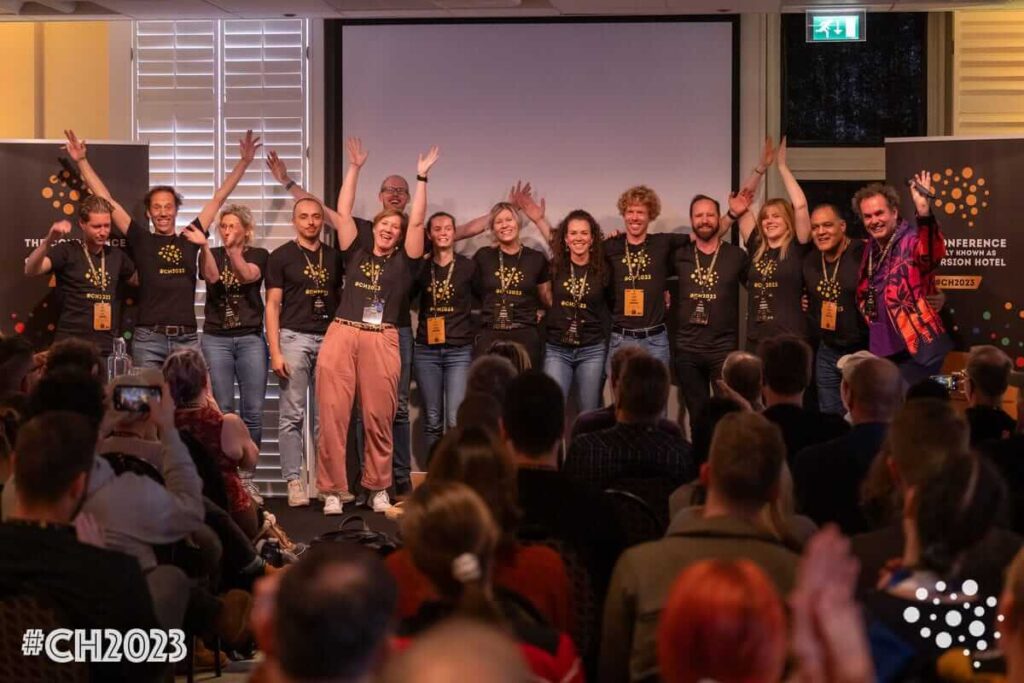
Source: https://conversionhotel.com/ch2023/
The 10th edition of Conversion Hotel offered a wealth of insights, from the power of diversity in teams to the importance of disappointment, avoidance and communicating effectively with upper management. These insights are valuable not only to CRO specialists, marketers, e-commerce managers and product owners, but to anyone involved in optimizing online experiences.
Thanks to Ton Wesseling, all participants and my colleagues at Online Dialogue for another unforgettable Conversion Hotel. Off to Experimentation Island in Ibiza next year?

 Nederlands Nederlands
 English