
March 5, 2026
Why experimentation is becoming an operating model for smart organizations
A conversation with Valentin Radu, founder of Omniconvert, on experimentation as an operating model, AI and sustainable digital growth. Read more

We are looking for new colleagues! Check out our vacancies.
Recently, I (Alexandros) attended the 22nd edition of the MIE. The program was - not entirely surprisingly - full of AI. This field is developing rapidly and more and more applications are emerging that make our work easier. Yet I noticed that many of the lectures were about challenges that I have encountered for years in my work as a data scientist. And rightly so, because these challenges are just now more relevant than ever. In this blog, I tell you more about them.

How do you tell a story with data? This was the subject of the lecture by Esther Rookhuijzen, founder of Jaaf Design. On the basis of a beautifully designed presentation (practice what you preach) she talks about the importance of clear visualizations. Because just as we are collecting more and more data, it is essential to find the proverbial needle in the haystack and communicate it clearly to the target audience. The latter deserves more attention, Esther believes. After all, this is the part of the data the end user gets to see. It is crucial that this communication is effective, so that the message comes across clearly and the value of the data is fully utilized. Esther concludes her talk with a number of practical tips, at least one of which I will definitely apply: limit the number of visual elements that attract attention.
... Just a quick note: we send out a newsletter every three weeks that includes the latest blogs, team updates and, of course, news about the offerings in our academy. Click here to subscribe.
The customer journey is becoming more and more measurable and with this we get an increasingly complete picture of the customer experience. Yet this does not make qualitative research obsolete. Dennis van der Veen of IKEA illustrates this with a telling example. To better understand the store's delivery process, he decided to ride along with the driver for a day. This gave insight into the challenges drivers face on a daily basis. For example, there were occasions when a closet had to be delivered to a packed Albert Cuyp street on the fourth floor. This inevitably led to delays in delivery, resulting in dissatisfied customers. When you experience this in practice, it immediately becomes clear where things go wrong, while this is often hidden in the data. Qualitative research is therefore an enrichment of your collected data and can help you look more specifically for patterns in the data.
As a data scientist, I get excited about data. The more, the better. But is it always desirable to measure everything? This was the thrust of a statement in a panel discussion on data-driven work in practice. After all, collecting and processing as much data as possible comes at the expense of our privacy. Fortunately, there are solutions. For example, argued Erwin Folmer, working for HAN University of Applied Sciences and Kadaster, for the use of synthetic data. This is artificially generated information that mimics the properties of real data without containing personal data. This allows us to extract interesting insights from data while safeguarding our privacy.
By the way, the importance of data ethics is certainly not a new trend. Earlier, Irene also wrote about this in her blog about Superweek 2024.
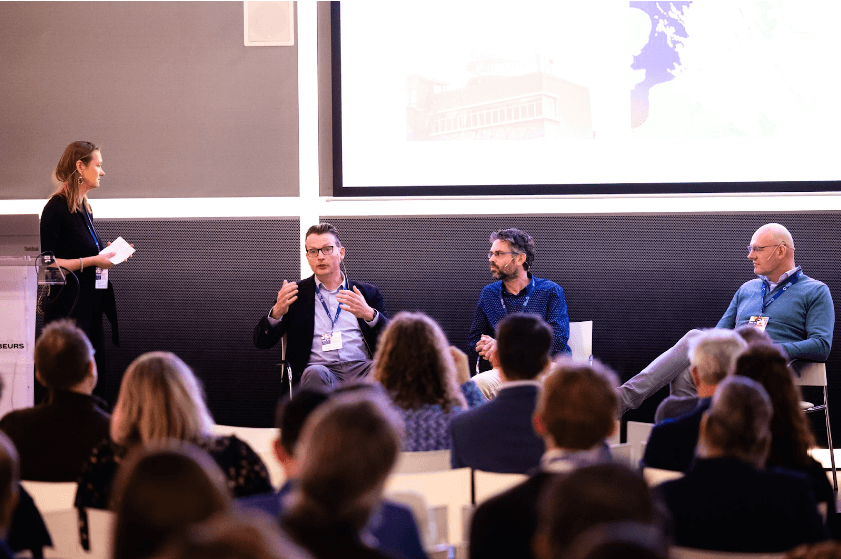
Looking back at MIE’24, it is clear that the role of AI will only increase. As argued above, we should certainly not lose sight of the importance of data visualization, qualitative research and ethics in this regard. Personally, I am following these developments with great interest. Would you also like to stay up to date with the latest trends in AI? Sign up for the DiDo on applied AI in CRO!
 Nederlands
 English