
March 5, 2026
Why experimentation is becoming an operating model for smart organizations
A conversation with Valentin Radu, founder of Omniconvert, on experimentation as an operating model, AI and sustainable digital growth. Read more

We are looking for a data analyst! Check the job posting.
Organizations that learn from mistakes grow faster, are more innovative and adapt more easily to new circumstances. Yet in practice we still find it quite difficult to accept and discuss failure.
On October 1, 2020, we organized the digital meetup ‘Failure and Blasting’ to better understand why this is so. Both speakers and participants were full of interesting insights about what we ourselves and our organizations can do to learn to fail better. You can read the key lessons here.
That the topic is recognizable to many participants was already evident from the responses to our survey prior to the meetup. Nine out of ten people sometimes make an important mistake at work. More than half of them conceal that mistake from colleagues. Usually shame is the main reason. Others do come clean about a mistake. Sometimes because there was no denying it, but sometimes to prevent a colleague from making the same mistake in the future.
What makes one person come out honestly about a mistake and another conceal it? And what can we do to make talking about failure easier? As the first speaker, Dr. Fieke Harinck (Leiden University) explained what we can learn from psychological research. Then it was the turn of Floris ten Berge (VodafoneZiggo), who has been involved in building an experimental culture within his organization since 2016. From his practical experience, he explained how to ensure that as an organization you learn from mistakes and what role experimentation plays in this.
Mistakes will be made. That cannot be avoided. After all, we are human beings. What matters is how your team or organization then responds to those mistakes. The key word here is psychological security. To admit a mistake, you have to make yourself vulnerable. People will only do this if they feel safe and do not worry that they will be ‘shot down’ by their colleagues or supervisor.
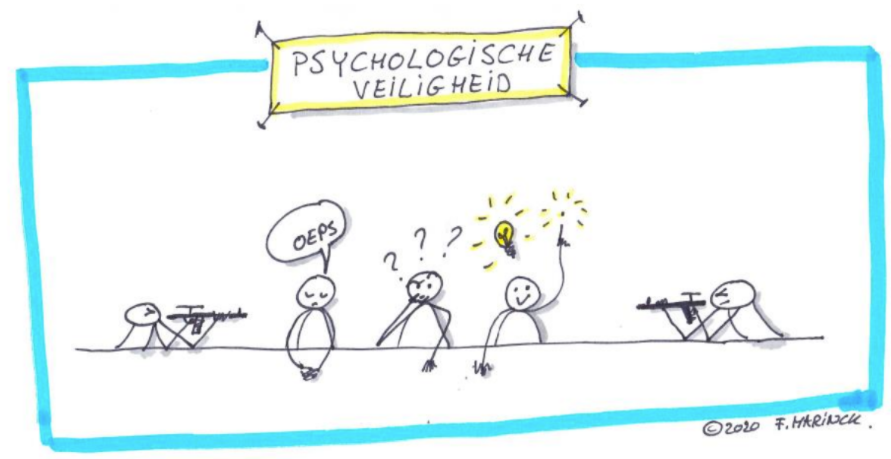
As a manager, how can you ensure that employees feel safe to admit mistakes? Fieke offers three pieces of advice:
Even if you are not a leader, you can do things that improve psychological safety in your team:
Floris begins by sharing his own failure In improving the sales journey. After extensive research, consultation with stakeholders and work by analysts, designers and developers, a new design was created for a key page in the journey. Expectations were high, but when the new page was tested in an A/B test, it turned out to be worse perform better than the original. So a waste of the time and resources invested.
At VodafoneZiggo, they learned from this to test ideas at an earlier stage. As humans, we are simply bad at predicting behavior. But about 25% of the ideas contribute positively to the result. The trick is therefore to test a lot to find out what the good ideas are and to learn from ‘failed’ ideas.
In the second part of his presentation, Floris gave examples and tips of how to get this ‘experiment’ mindset into the culture of your organization:
Finally, Floris explained how space is created at VodafoneZiggo to safely come out for mistakes:

Fieke and Floris' advice and examples offer inspiration for how we can become better at failure in our own organizations. VodafoneZiggo has already proven that all that failure can have beautiful consequences: they won prizes at this year's international Experimentation Culture Awards.
Want help with or learn more about creating a successful experimentation culture? Become data-driven with help from our Culture Change Model.
 Nederlands Nederlands
 English