
We are looking for a data analyst! Check the job posting.

From best practice to shopper mindset at Emerce Conversion

During Emerce Conversion Lotte Reijmer, consumer psychologist and senior behavioral expert at Online Dialogue, shared a question that many CRO specialists will recognize:

‘Do you have tests that have worked well for others?’

An understandable question. Especially if you are just starting to experiment, or if previous tests have yielded little. Then you want to know what works, what patterns are proven and what approaches you can adopt. But according to Lotte, that's often exactly the wrong place to start. Not because you can't learn from others, but because many organizations are still too quick to look for solutions without first having a clear picture of what is going on. How their own customer decides. This is precisely where the difference between a test that sounds logical and one that actually works arises. Learn more about the shopper mindset in CRO
The problem with best practices

Within CRO, solutions such as more reviews, an eye-catching CTA, adding ‘urgency’ or putting important information higher on the page are still often thought of.

All things that can work well in the right context. 

Only that context is rarely universal.

What helps for one shop may backfire for another. Even if the product seems similar in outline. Because a customer not only buys a product, but also makes a certain kind of decision. And that decision does not always demand the same thing.

Therein lies the heart of Lotte's story: one size never fits all.

From solution to behavior

As a psychologist, what Lotte adds to CRO is the look at behavior. Where data shows what happens, psychology helps explain why that happens.

From that behavioral side, she introduces the shopper mindset. A way to better understand what customers need to arrive at a choice.

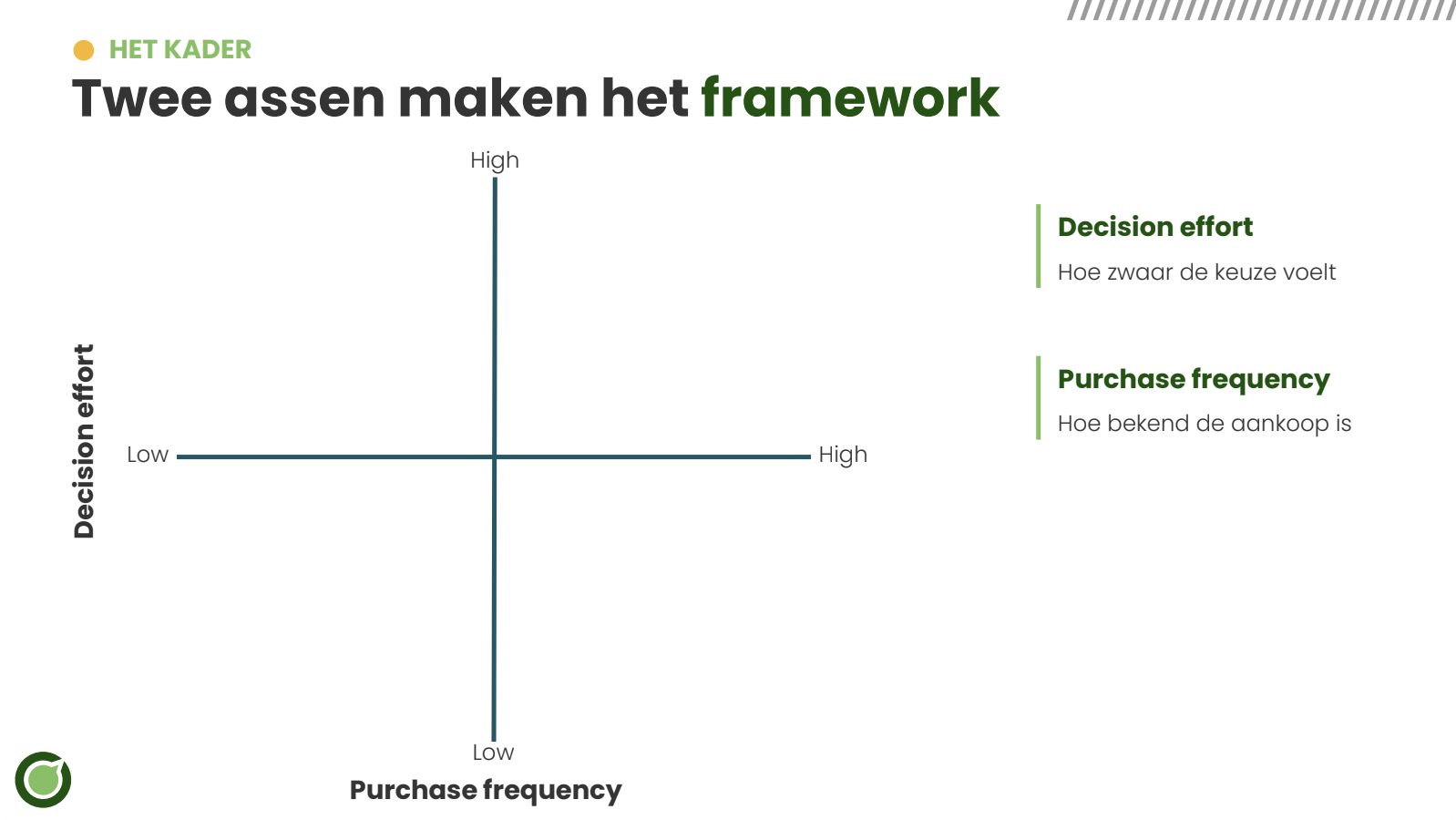
That mindset is determined by two factors:

  • how much effort a choice takes
  • how often someone makes that purchase

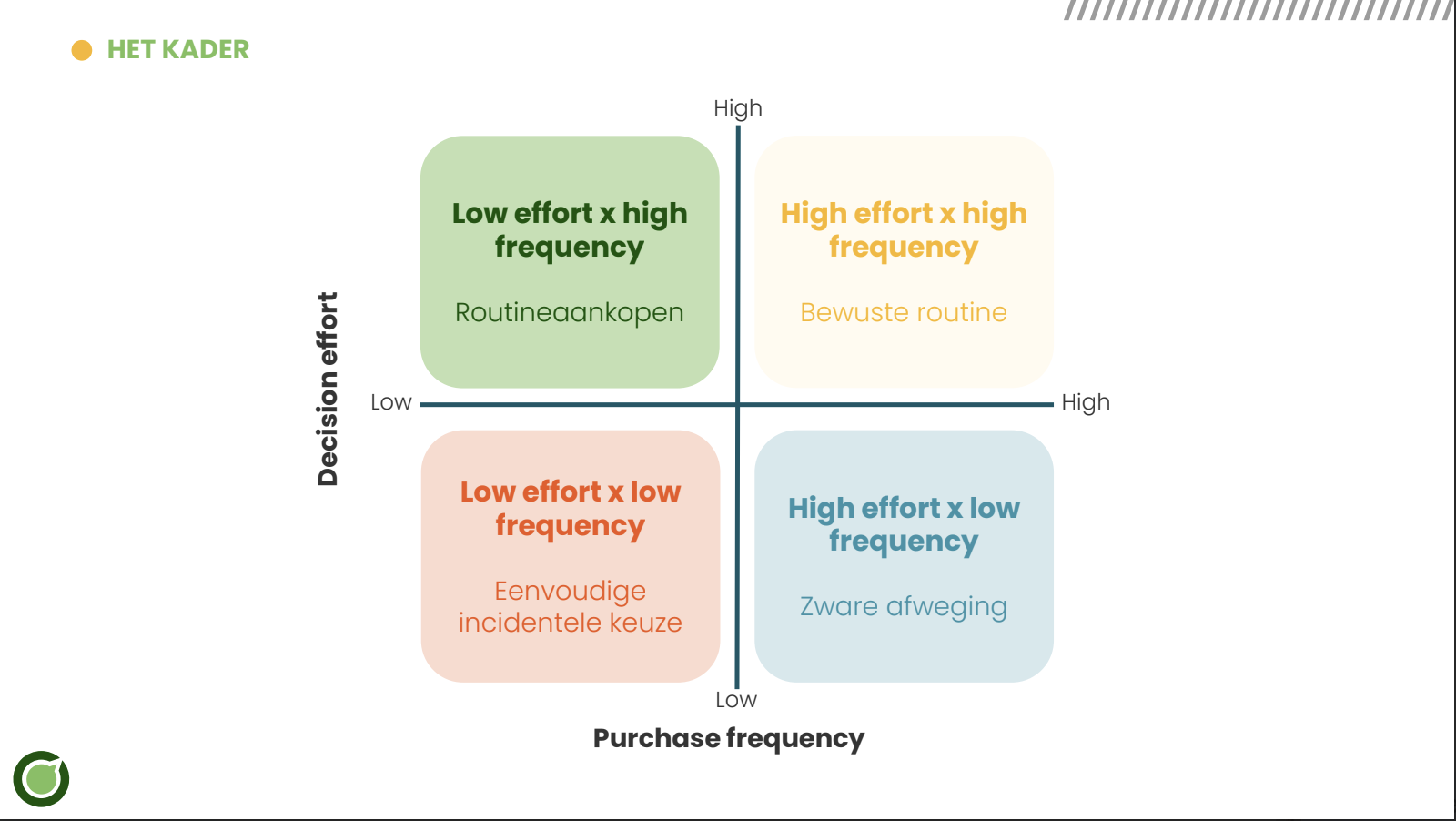
Together, those two axes form four different situations. And each of those situations requires something different from your Web site and your experiment strategy.

shoppers mindset matrix

Not every purchase requires the same

With some products, a customer wants speed above all else. No thinking, no comparing, no too many incentives: just get on with it. You see this especially with routine purchases: products that people buy often and know well, such as supermarket products, drugstore items or basics. We call this category low effort x high frequency.

In addition, there is high effort x high frequency, and category in which people buy more often and still remain critical. For example, with skincare, baby products or sports nutrition. There, people look less for speed and more for confirmation. They want to know if this is still the right choice for them.

The third category low effort x low frequency consists of purchases that people don't do much but also don't want to spend a lot of time on. Think accessories, party supplies or a day out. That's where routine is lacking, as well as the motivation to compare deeply. In such cases, shortcuts do help: popular choices, lists and labels like ‘best choice.

And then there's the category of heavy consideration. High effort x low frequency: insurance, mortgages, laptops, mattresses. Decisions that are infrequent but have impact. That's where doubt is part of the process. Customers want to compare, understand and be sure they are right. This is where speed does not work as a persuasion mechanism but providing certainty does.

Shoppers matrix including shoppers

An important insight here: many best practices are designed for one specific type of decision. Often they steer for convenience and speed. Think fewer steps, clear CTAs or quick choices. But if your customer needs control and confirmation, such an approach is counterproductive. Then someone doesn't want a faster decision, but rather a better understanding and certainty.

Therein lies exactly why best practices do not work universally.

What practice shows

During the presentation, Lotte showed several examples showing exactly that difference.

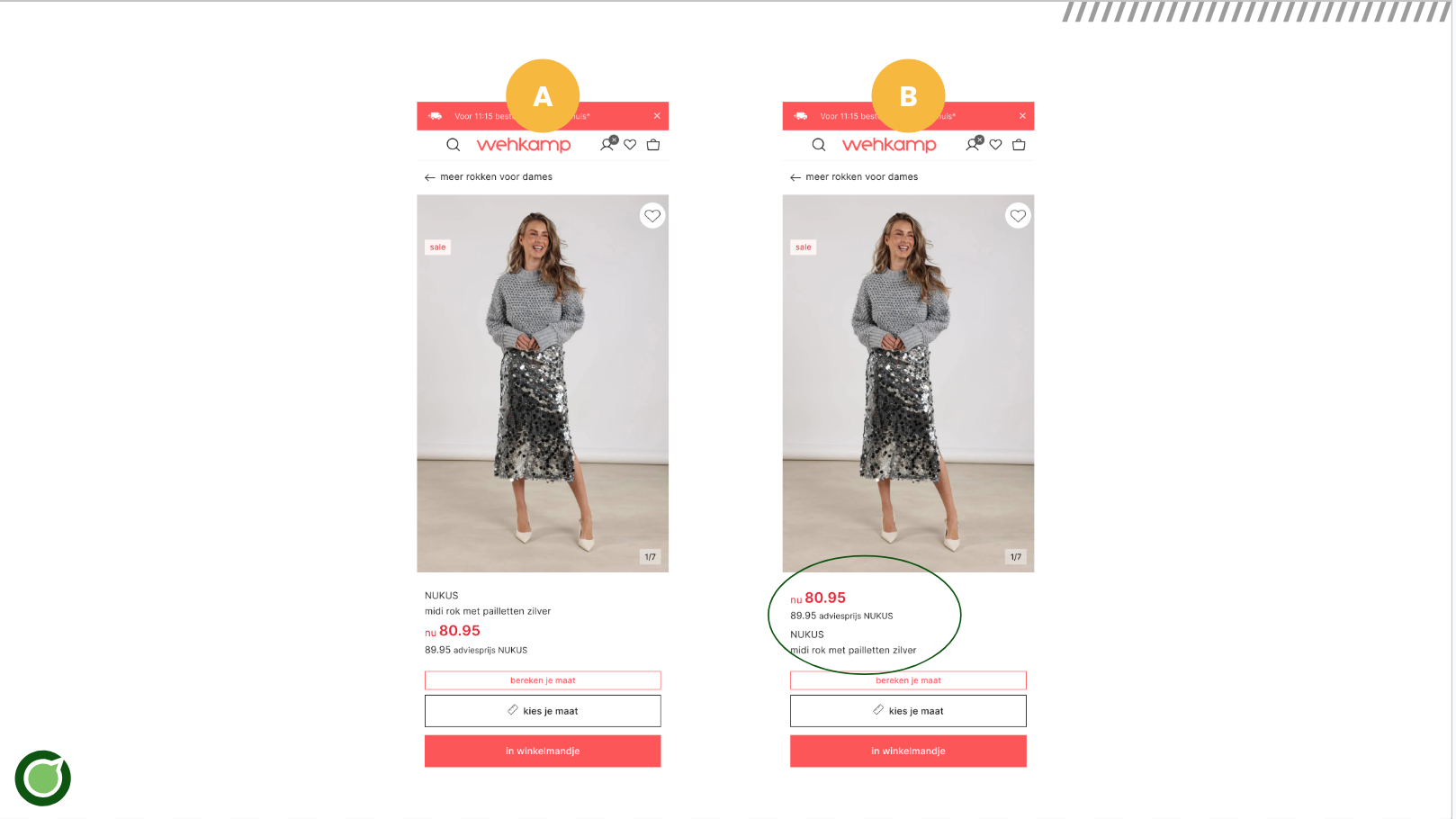
At Wehkamp, testing was done with displaying price more prominently. At first, this seemed like a successful test. But when looking deeper into the results, it turned out that the effect differed greatly by category. In fashion it worked well. In non-fashion it did not. This is easily explained: in fashion, price more often helps as a decision signal within an emotional choice. However, in non-fashion, such as furniture or home furnishings, the same price focus is more likely to cause additional comparison and doubt.

example wehkamp

You can also see nuance within product groups. For example, Lotte showed that not every insurance is bought the same way. Car insurance is more familiar to many people and comes back more often than wedding insurance. As a result, the mindset with which someone makes such a choice also differs.

Another example was about two lingerie brands: PrimaDonna and Marie Jo. At first glance similar products, yet similar tests gave different results. With PrimaDonna, fit is more crucial and the margin of error feels greater because PrimaDonna focuses on larger cup sizes. With Marie Jo, the situation is different. As a result, despite a similar product type, shoppers need something different.

The extra layer: perceived risk

In addition to effort and purchase frequency, a third factor comes into play: perceived risk. Or in Dutch, how big does the consequence of a wrong choice feel? That risk runs like an extra layer over the whole matrix. A purchase can be relatively simple, but still feel exciting. Or, on the contrary, require a lot of thinking, without the consequence of a wrong choice being very great. That very factor explains why two products that are close together still require different approaches.

Once perceived risk increases, the need shifts. Then reassurance becomes more important than speed. This is reflected in what people need: more proof, more explanation, more advice, more clarity about what happens after purchase. Not less.

What does this mean for CRO?

The main lesson from Lotte's story is actually quite simple.

Stop thinking in terms of best practices.
Start thinking in behavior.

The question is not: 

Which solution works best?

But: 

What does this client need right now to move forward?

Is anyone looking for speed? Help with choice? Confirmation? Or certainty? Only when you have that in focus can you determine what to test.

Conclusion

CRO has long since ceased to be just the business of colors, buttons and loose optimizations. But as long as we keep testing without context, we keep looking for universal answers that don't exist in practice. The real step forward is in understanding how people decide. Not taking the average, but the solutions that apply to your customer's situation. Because only then does it become clear why something works. And perhaps more importantly, it makes it clear why something that ‘always works’ doesn't with you.

Want to better understand how your customers decide and where their doubts and needs come from? Discover how qualitative research helps make behavior insightful and inform better choices.

You may also find these blogs interesting

There are currently no blogs on this page.